

What You’ll Learn in This Article
● Time management when you’re your own boss
● Productivity tips for entrepreneurs
● Daily routine & time-blocking
● Best time management apps
● Work-life balance self-employed
● Avoid procrastination & stress
⇊LISTEN TO THE ARTICLE⇊
The Double-Edged Sword of Freedom
Becoming your own boss is one of the most exciting milestones in your career. You finally have the freedom to choose your projects, set your schedule, and shape your future without anyone micromanaging you. That flexibility is powerful, but let’s be honest, it can also feel overwhelming.
When you leave the traditional 9–5, you step into a world where you are responsible for everything. The endless to-do lists, back-to-back tasks, and blurred lines between work and life can quickly drain your energy if you don’t manage your time well.
The good news? You don’t have to burn out to succeed. This guide will walk you through practical strategies to help you manage your time like a pro while keeping the freedom you worked so hard to achieve.
Why Time Management Matters When You’re Your Own Boss
Running your own business sounds glamorous, but without structure, it’s easy to slip into procrastination or distraction. Unlike a regular job, no one tells you when to clock in or when to stop working. That independence is empowering, but it also requires discipline.
Here’s why effective time management is your best ally:
- Increased productivity – You’ll get more done in fewer hours.
- Better work-life balance – You’ll avoid letting work consume your personal life.
- Reduced stress – A structured plan helps you feel in control instead of constantly chasing tasks.
📊 According to a 2023 survey, 67% of freelancers admitted that poor time management was their biggest hurdle in staying productive.
Build a Daily Routine That Works for You
Set Clear Working Hours (Even if Flexible)
Even if you chose freelancing for flexibility, setting clear working hours creates consistency. When you know exactly when your day starts and ends, your mind naturally prepares for productivity.
Try adding rituals to mark these transitions:
- Morning: a cup of coffee, journaling, or reviewing your daily goals.
- Evening: shutting down your laptop, planning tomorrow, or a short walk.
These cues train your brain to shift into “work mode” and “off mode” more effectively.
Prioritize Tasks with Time-Blocking
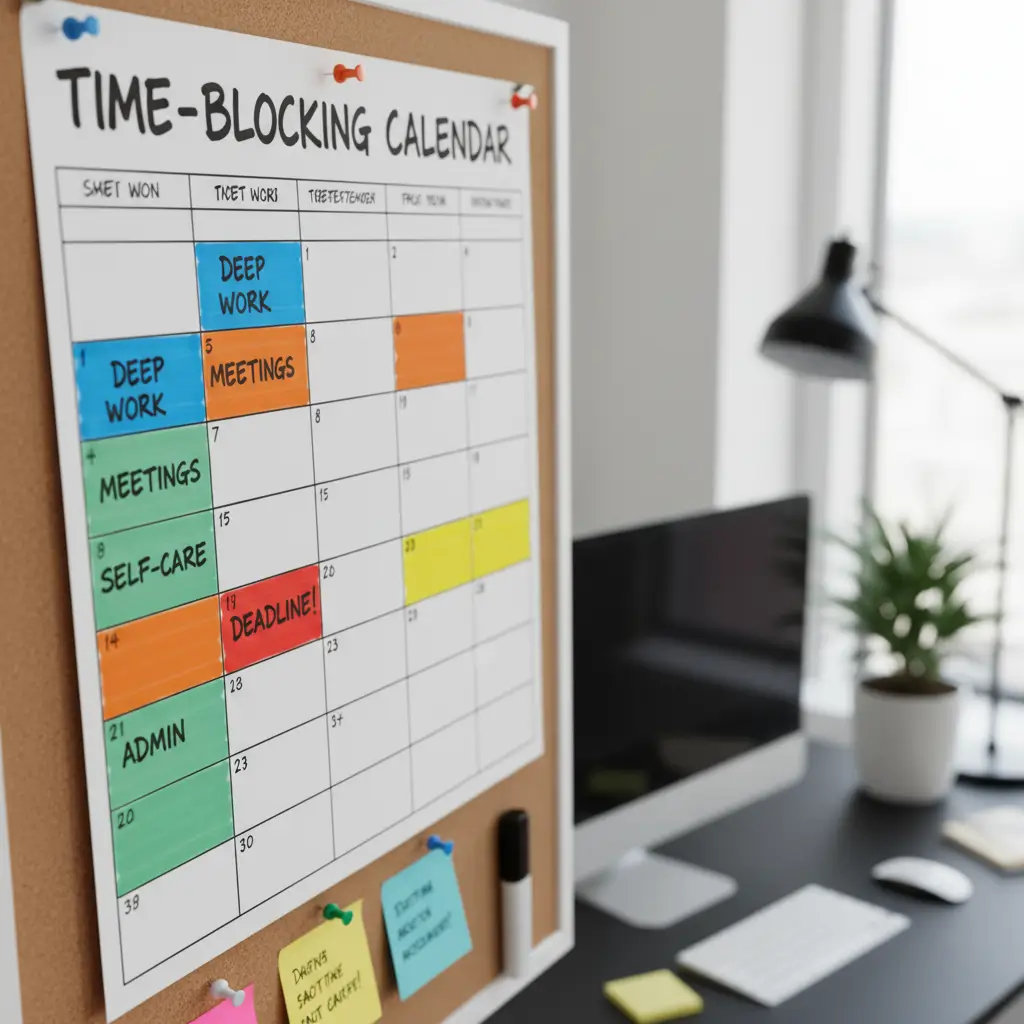
Time-blocking means assigning specific hours to specific tasks. Instead of juggling emails, projects, and calls all at once, you dedicate blocks of time for each. This method keeps you focused and ensures the most important tasks actually get done.
Use digital tools like Google Calendar, Notion, or Trello to plan your blocks.
Here’s an example of a productive schedule you can adapt:
| Time Slot | Task Focus | Notes |
|---|---|---|
| 8:00 – 9:00 AM | Planning & Goal Setting | Review to-do list, emails |
| 9:00 – 12:00 PM | Deep Work (Creative Tasks) | Writing, coding, design |
| 12:00 – 1:00 PM | Break & Lunch | Screen-free recharge |
| 1:00 – 3:00 PM | Client Work/Meetings | Zoom calls, updates |
| 3:00 – 5:00 PM | Business Growth Activities | Marketing, learning, outreach |

Master Productivity with Proven Time Management Techniques
The Pomodoro Technique
Work in 25-minute sprints with 5-minute breaks. This helps you stay laser-focused, especially on repetitive or mentally draining tasks.
The 80/20 Rule (Pareto Principle)
Focus on the 20% of tasks that bring 80% of your results. That might be closing sales, building relationships, or creating content, not endlessly tweaking small details.
Task Batching
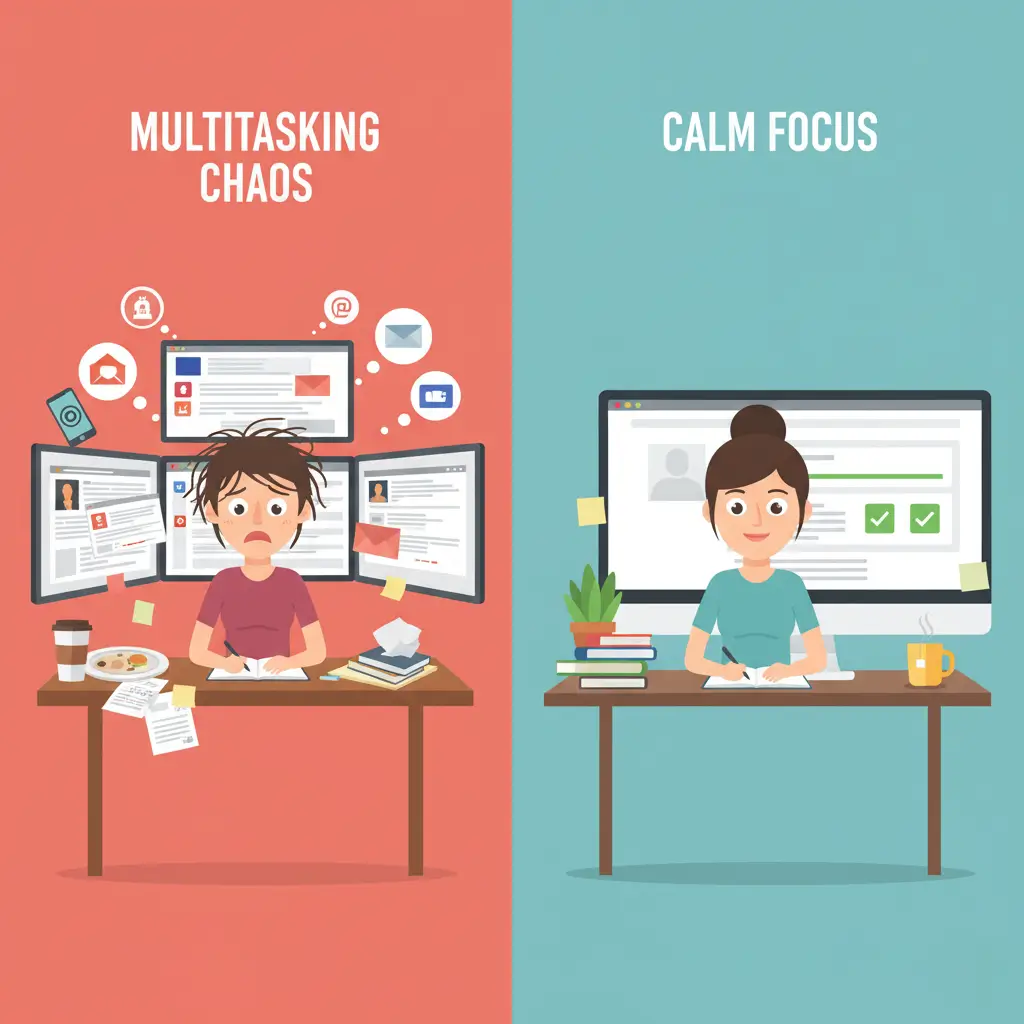
Group similar tasks together. Instead of checking emails 20 times a day, dedicate 30 minutes just for communication. This prevents mental fatigue from constant task-switching.
Tools & Apps Every Self-Employed Professional Needs
The right tools can make your workflow smoother and save you hours every week:
- Task Management: Trello, Asana, Notion.
- Time Tracking: Toggl, RescueTime.
- Focus Tools: Forest app, noise-canceling playlists, website blockers.
Integrations and automation (like connecting your calendar to your task manager) help reduce manual work and let you focus on what matters most.
Balance Work and Life Without Burning Out
Set Boundaries with Family & Clients
Communicate your working hours clearly to both family and clients. Just because you work from home doesn’t mean you’re available 24/7. Setting limits helps prevent burnout and creates respect for your time.
Make Time for Self-Care
Your productivity is directly tied to your well-being. Exercise, hobbies, and downtime are not luxuries, they’re necessities.
Here are quick self-care breaks you can weave into your day:
- Take a 10-minute walk outside.
- Stretch or do yoga for 5–10 minutes.
- Write in a gratitude journal.
- Listen to a favorite song to reset your mood.
Common Time Management Mistakes When You’re Your Own Boss
Avoid these pitfalls that many self-employed people fall into:
- Trying to multitask all day.
- Saying “yes” to low-value opportunities.
- Working endless hours without rest.
- Overloading your daily schedule with unrealistic goals.

FAQ – How to Manage Time When You’re Your Own Boss
What’s the best daily schedule for self-employed people?
There’s no one-size-fits-all, but time-blocking and aligning tasks with your natural energy levels works best.
How can I avoid procrastination when I work alone?
Try Pomodoro sessions, set accountability check-ins, and remove digital distractions.
Can time management really reduce stress?
Yes. A structured plan helps you avoid last-minute scrambles and creates peace of mind.
What’s the #1 tool for managing time as your own boss?
A digital planner combined with a time tracker is the most effective combo for staying organized.
Conclusion: Take Control of Your Time, Take Control of Your Life
Freedom comes with responsibility. When you manage your time wisely, you don’t just finish tasks, you create balance, protect your energy, and grow your business sustainably.
Start small. Pick one strategy from this guide, maybe time-blocking or Pomodoro and test it this week.
Remember: when you learn how to manage time when you’re your own boss, you’re not only building a business. You’re building a lifestyle that supports your goals, peace, and independence.
Now it’s your turn, which time management strategy will you try first? ➤